The Focus of the Noble Mindfulness
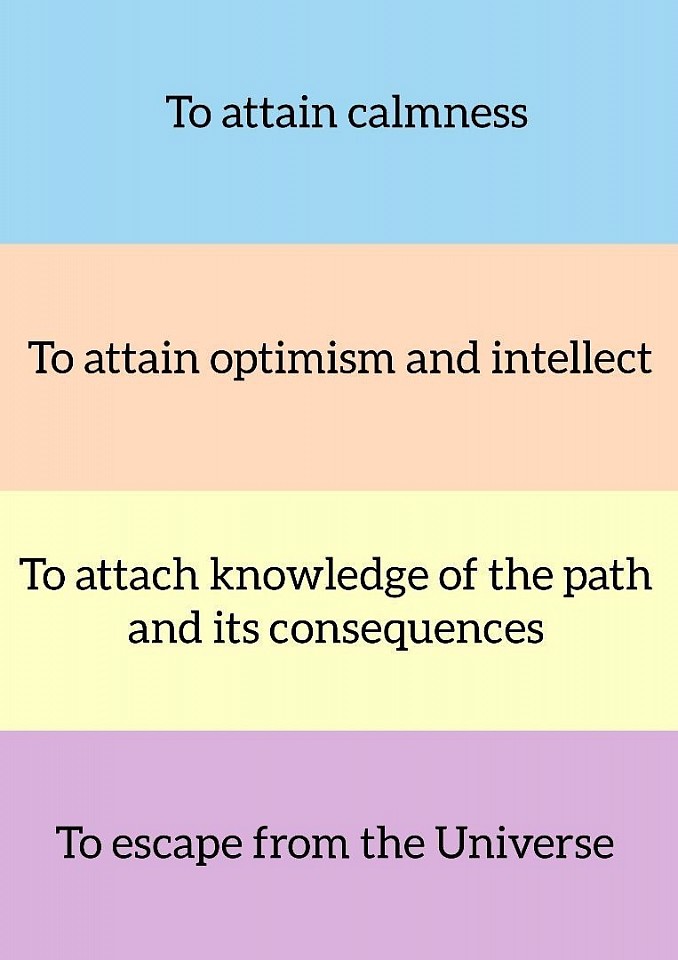
4 colors, and words
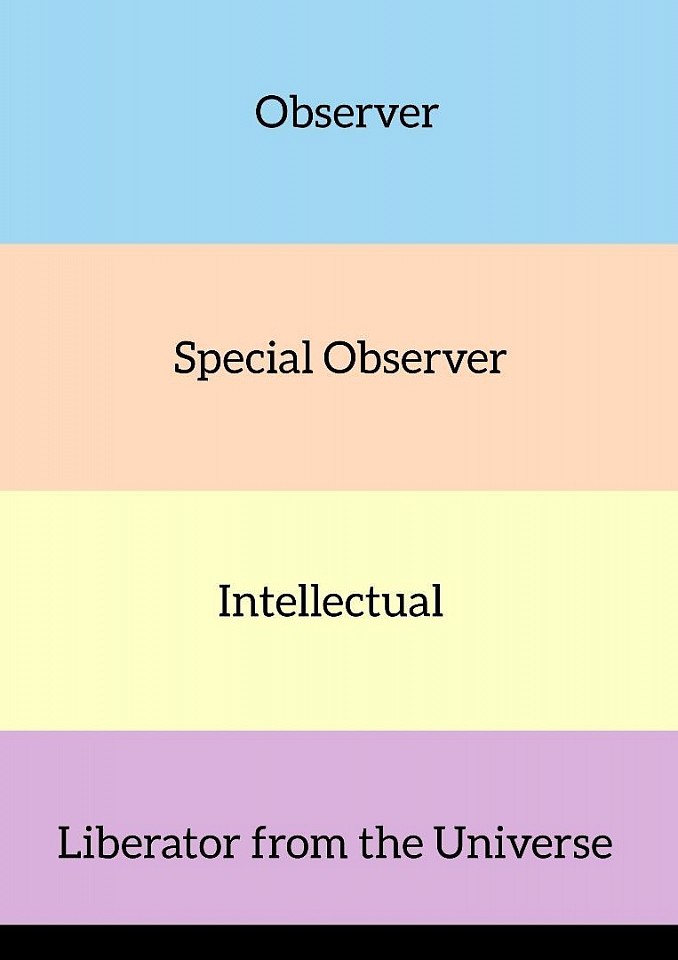
O, SO, I, L, & 4 Colors.
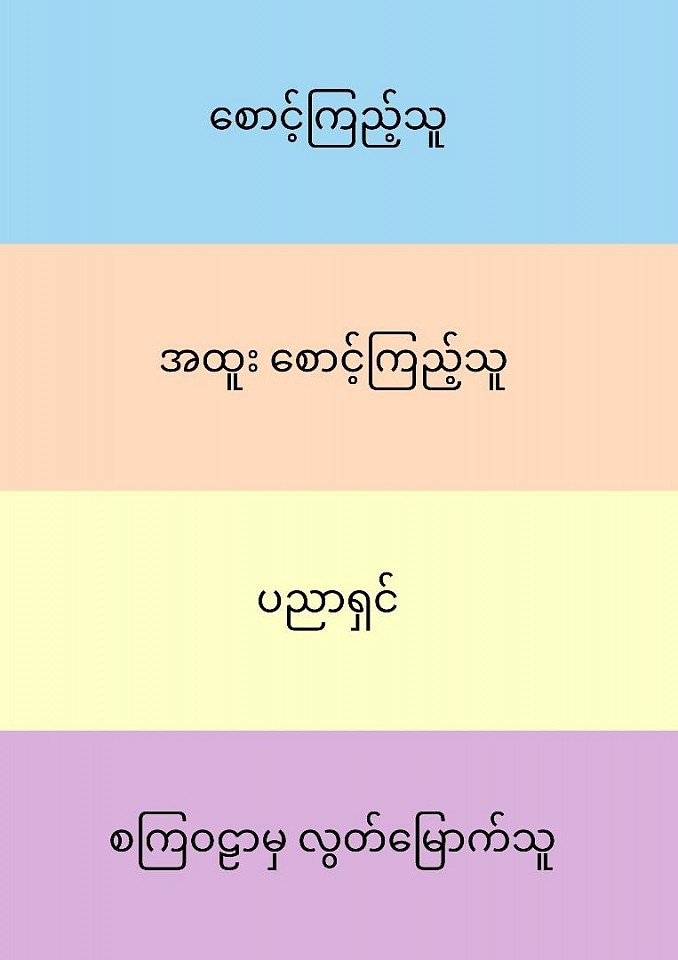
သမထ၊ ဝိပဿနာ၊ ပညာရှင်၊ နဲ့ သံသရာဝဋ်ဆင်းရဲမှ လွတ်မြောက်သွားသူ။
Heaven does not exist within this world and the solar system, nor does hell. Ordinary people cannot see these two things.
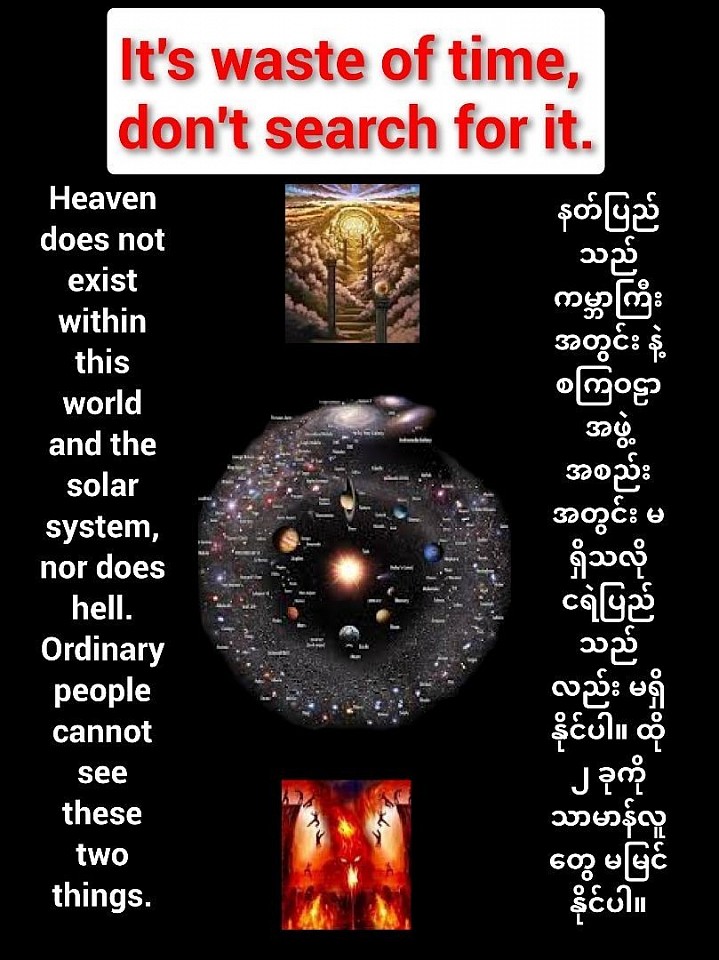
It's a waste of time. Don't search for it.
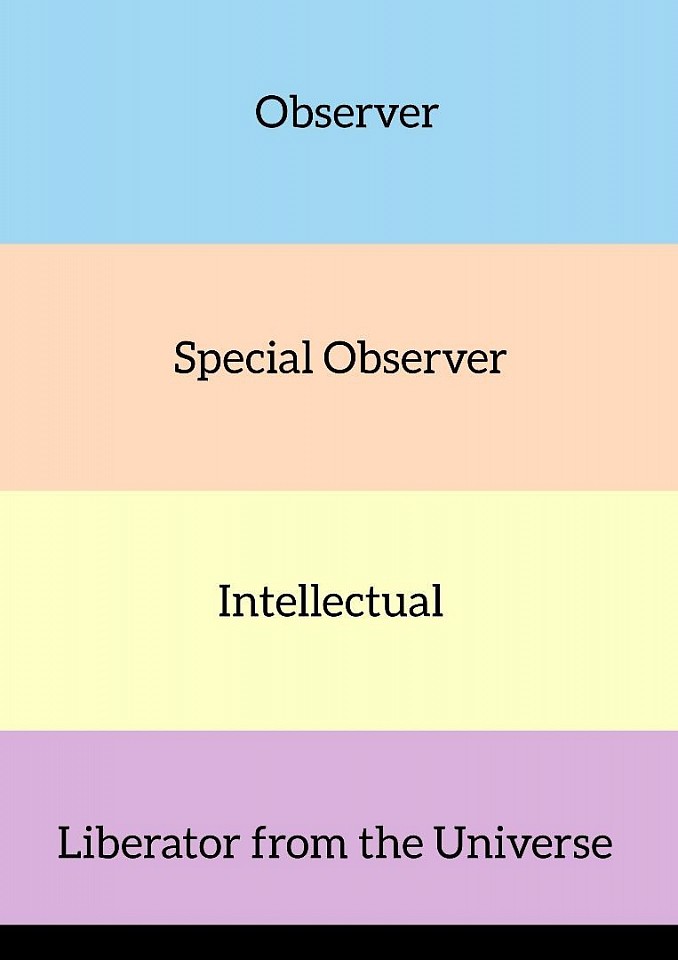
Observer, Special Observer, Intellectual, & Liberator from the Universe. 25 Jan, 2025.
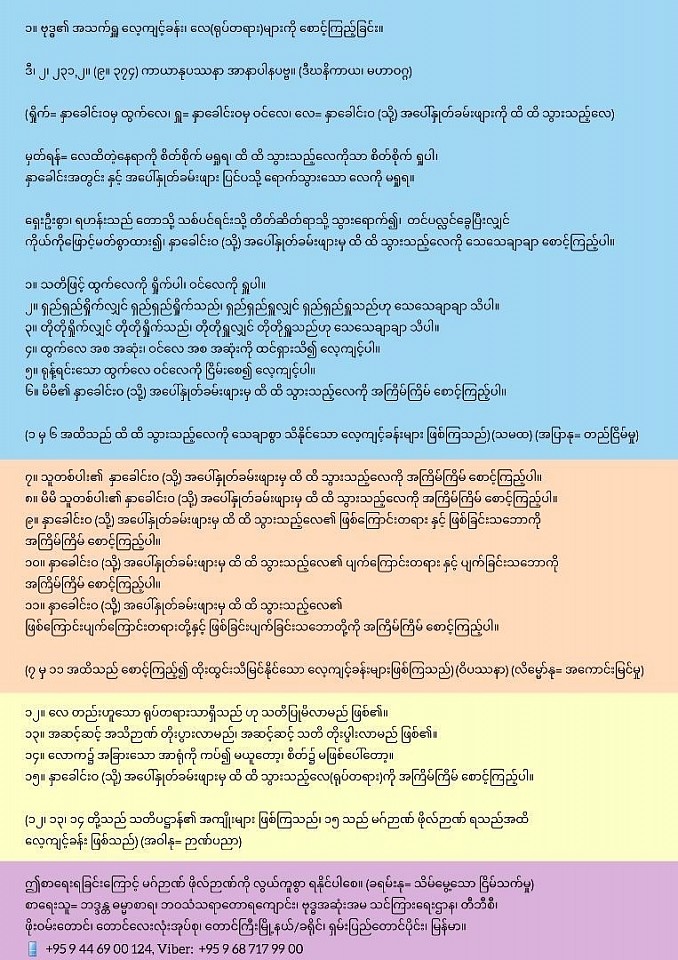
ထွက်လေ ဝင်လေကို အကြိမ်ကြိမ် စောင့်ကြည့်ခြင်း။ ၂၁ ဇန္နဝါရီ၊ ၂၀၂၅
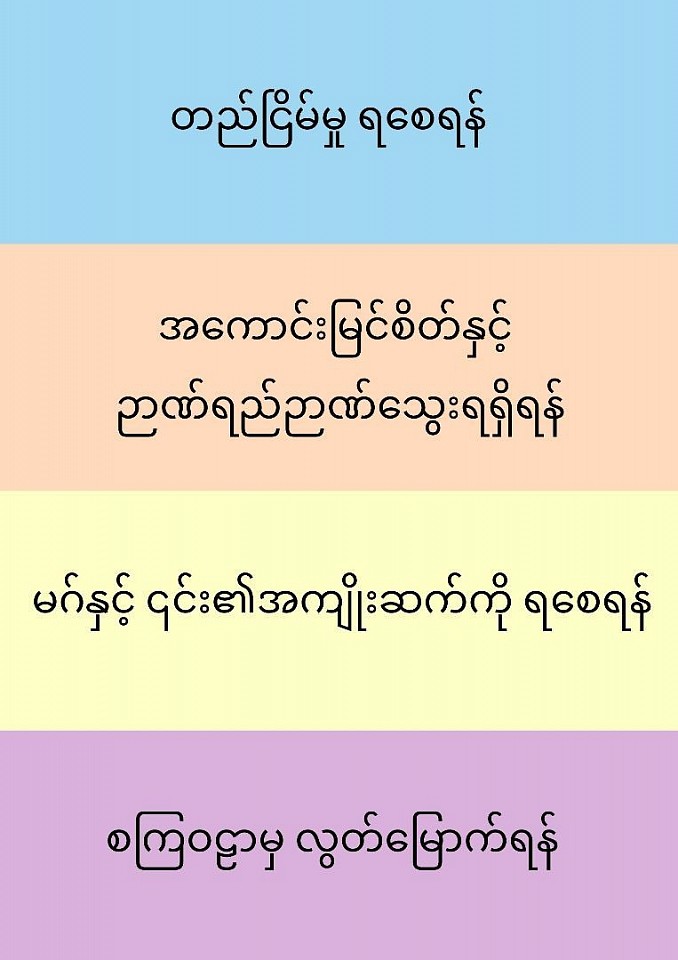
တည်ငြိမ်၊ အကောင်းမြင်၊ ဉာဏ်ပညာ၊ မဂ်နှင့် ၎င်း၏ အကျိုးဆက်ကို ရရန်၊ နှင့် သံသရာဆင်းရဲမှ လွတ်ရန်။ ၂၁ ဇန္နဝါရီ၊ ၂၀၂၅။
Words of A4 Paper. Updated in Sat, 25 jan, 2025.
၁။ ဗုဒ္ဓ၏ အသက်ရှူ လေ့ကျင့်ခန်း၊ လေ(ရုပ်တရား)များကို စောင့်ကြည့်ခြင်း။ (မြတ်သော သတိ၏အာရုံများ)
ဒီ၊ ၂၊ ၂၃၁,၂။ (၉။ ၃၇၄) ကာယာနုပဿနာ အာနာပါနပဗ္ဗ။ (ဒီဃနိကာယ၊ မဟာဝဂ္ဂ၊ မဟာသတိပဋ္ဌာနသုတ္တ)
(ရှိုက်= နှာခေါင်းဝမှ ထွက်လေ၊ ရှူ= နှာခေါင်းဝမှ ဝင်လေ၊ လေ= နှာခေါင်းဝ (သို့) အပေါ်နှုတ်ခမ်းဖျားကို ထိ ထိ သွားသည့်လေ)
မှတ်ရန်= လေထိတဲ့နေရာကို မကြည့်ရ၊ ထိ ထိ သွားသည့်လေကိုသာ စောင့်ကြည့်ပါ၊
နှာခေါင်းအတွင်း နှင့် အပေါ်နှုတ်ခမ်းဖျား ပြင်ပသို့ ရောက်သွားသော လေကို မကြည့်ရ။
ရှေးဦးစွာ၊ ရဟန်းသည် တောသို့ သစ်ပင်ရင်းသို့ တိတ်ဆိတ်ရာသို့ သွားရောက်၍၊ တင်ပလ္လင်ခွေပြီးလျှင်
ကိုယ်ကိုဖြောင့်မတ်စွာထား၍၊ နှာခေါင်းဝ (သို့) အပေါ်နှုတ်ခမ်းဖျားမှ ထိ ထိ သွားသည့်လေကို သေသေချာချာ စောင့်ကြည့်ပါ။
၁။ သတိဖြင့် ထွက်လေကို ရှိုက်ပါ၊ ဝင်လေကို ရှူပါ။
၂။ ရှည်ရှည်ရှိုက်လျှင် ရှည်ရှည်ရှိုက်သည်၊ ရှည်ရှည်ရှူလျှင် ရှည်ရှည်ရှူသည်ဟု သေသေချာချာ သိပါ။
၃။ တိုတိုရှိုက်လျှင် တိုတိုရှိုက်သည်၊ တိုတိုရှူလျှင် တိုတိုရှူသည်ဟု သေသေချာချာ သိပါ။
၄။ ထွက်လေ အစ အဆုံး၊ ဝင်လေ အစ အဆုံးကို ထင်ရှားသိ၍ လေ့ကျင့်ပါ။
၅။ ရုန့်ရင်းသော ထွက်လေ ဝင်လေကို ငြိမ်းစေ၍ လေ့ကျင့်ပါ။
၆။ မိမိ၏ နှာခေါင်းဝ (သို့) အပေါ်နှုတ်ခမ်းဖျားမှ ထိ ထိ သွားသည့်လေကို အကြိမ်ကြိမ် စောင့်ကြည့်ပါ။
(၁ မှ ၆ အထိသည် ထိ ထိ သွားသည့်လေကို သေချာစွာ သိနိုင်သော လေ့ကျင့်ခန်းများ ဖြစ်ကြသည်)
(သမထ) (စောင့်ကြည့်သူ) (အပြာနု= တည်ငြိမ်မှု ရရန်)
၇။ သူတစ်ပါး၏ နှာခေါင်းဝ (သို့) အပေါ်နှုတ်ခမ်းဖျားမှ ထိ ထိ သွားသည့်လေကို အကြိမ်ကြိမ် စောင့်ကြည့်ပါ။
၈။ မိမိ သူတစ်ပါး၏ နှာခေါင်းဝ (သို့) အပေါ်နှုတ်ခမ်းဖျားမှ ထိ ထိ သွားသည့်လေကို အကြိမ်ကြိမ် စောင့်ကြည့်ပါ။
၉။ နှာခေါင်းဝ (သို့) အပေါ်နှုတ်ခမ်းဖျားမှ ထိ ထိ သွားသည့်လေ၏ ဖြစ်ကြောင်းတရား နှင့် ဖြစ်ခြင်းသဘောကို
အကြိမ်ကြိမ် စောင့်ကြည့်ပါ။
၁၀။ နှာခေါင်းဝ (သို့) အပေါ်နှုတ်ခမ်းဖျားမှ ထိ ထိ သွားသည့်လေ၏ ပျက်ကြောင်းတရား နှင့် ပျက်ခြင်းသဘောကို
အကြိမ်ကြိမ် စောင့်ကြည့်ပါ။
၁၁။ နှာခေါင်းဝ (သို့) အပေါ်နှုတ်ခမ်းဖျားမှ ထိ ထိ သွားသည့်လေ၏
ဖြစ်ကြောင်းပျက်ကြောင်းတရားတို့နှင့် ဖြစ်ခြင်းပျက်ခြင်းသဘောတို့ကို အကြိမ်ကြိမ် စောင့်ကြည့်ပါ။
(၇ မှ ၁၁ အထိသည် စောင့်ကြည့်၍ ထိုးထွင်းသိမြင်နိုင်သော လေ့ကျင့်ခန်းများဖြစ်ကြသည်)
(ဝိပဿနာ) (အထူး စောင့်ကြည့်သူ) (လိမ္မော်နု= အကောင်းမြင်မှု နှင့် ဉာဏ်ပညာ ရစေရန်)
၁၂။ လေ တည်းဟူသော ရုပ်တရားသာရှိသည် ဟု သတိပြုမိလာမည် ဖြစ်၏။
၁၃။ အဆင့်ဆင့် အသိဉာဏ် တိုးပွားလာမည်၊ အဆင့်ဆင့် သတိ တိုးပွါးလာမည် ဖြစ်၏။
၁၄။ လောက၌ အခြားသော အာရုံကို ကပ်၍ မယူတော့၊ စိတ်၌ မဖြစ်ပေါ်တော့။
၁၅။ နှာခေါင်းဝ (သို့) အပေါ်နှုတ်ခမ်းဖျားမှ ထိ ထိ သွားသည့်လေ(ရုပ်တရား)ကို အကြိမ်ကြိမ် စောင့်ကြည့်ပါ။
(၁၂၊ ၁၃၊ ၁၄ တို့သည် သတိပဋ္ဌာန်၏ အကျိုးများ ဖြစ်ကြသည်၊ ၁၅ သည် မဂ်ဉာဏ် ဖိုလ်ဉာဏ် ရသည်အထိ
လေ့ကျင့်ခန်း ဖြစ်သည်) (ပညာရှင်) (အဝါနု= မဂ်ဉာဏ် ဖိုလ်ဉာဏ် ရစေရန်)
ဤစာရေးရခြင်းကြောင့် မဂ်ဉာဏ် ဖိုလ်ဉာဏ်ကို လွယ်ကူစွာ ရနိုင်ပါစေ။ (ခရမ်းနု= သိမ်မွေ့သော ငြိမ်သက်မှု)
စာရေးသူ= ဘဒ္ဒန္တ ဓမ္မာစာရ၊ ဘဝသံသရာတောရကျောင်း၊ ဗုဒ္ဓအဆုံးအမ သင်ကြားရေးဌာန၊ တီဘီစီ၊
ဖိုးဝမ်းတောင်၊ တောင်လေးလုံးအုပ်စု၊ တောင်ကြီးမြို့နယ်/ခရိုင်၊ ရှမ်းပြည်တောင်ပိုင်း၊ မြန်မာ။
📱 +95 9 44 69 00 124, Viber : +95 9 68 717 99 00
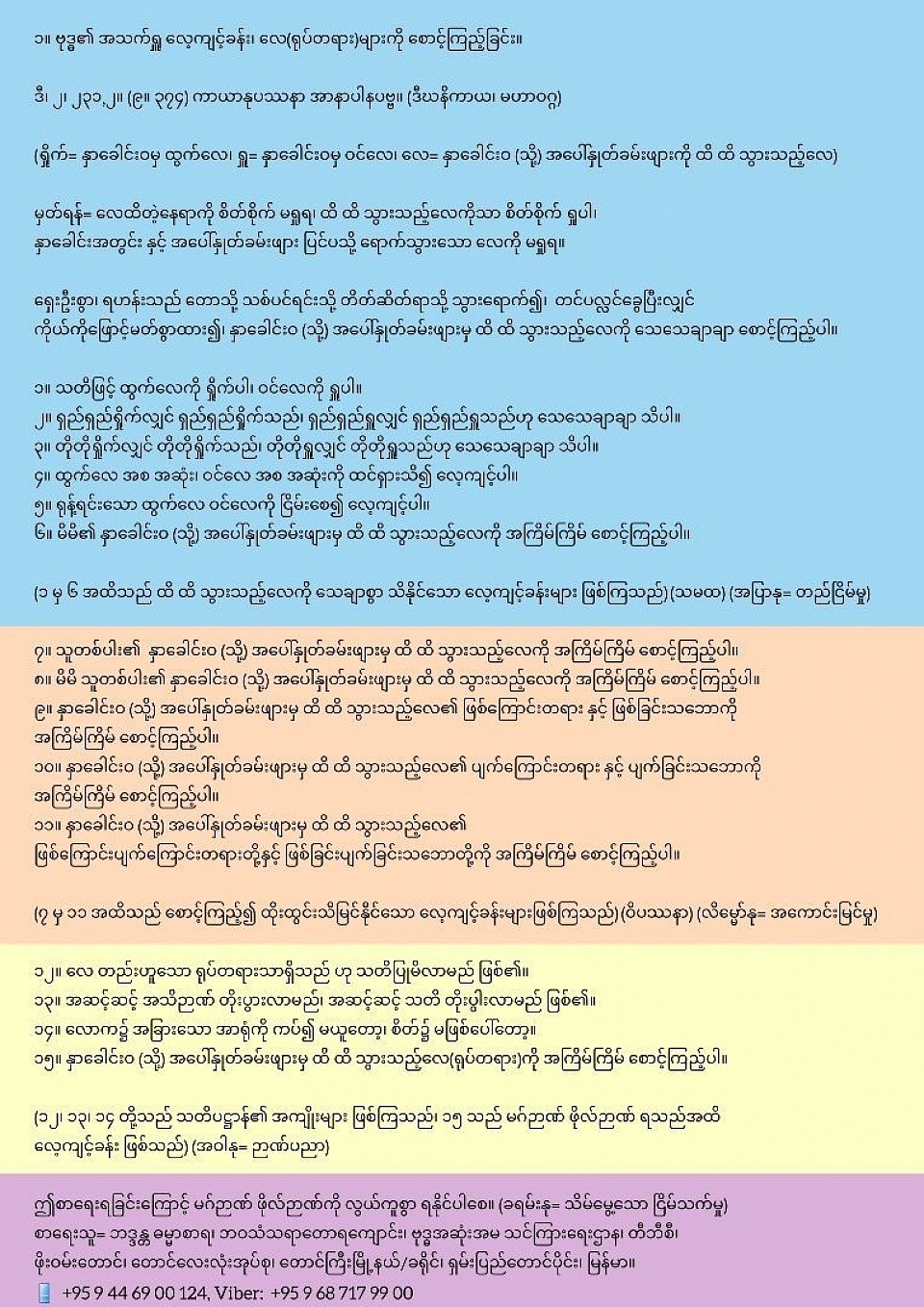
၁။ ဗုဒ္ဓ၏ အသက်ရှူ လေ့ကျင့်ခန်း၊ လေ(ရုပ်တရား)များကို စောင့်ကြည့်ခြင်း။
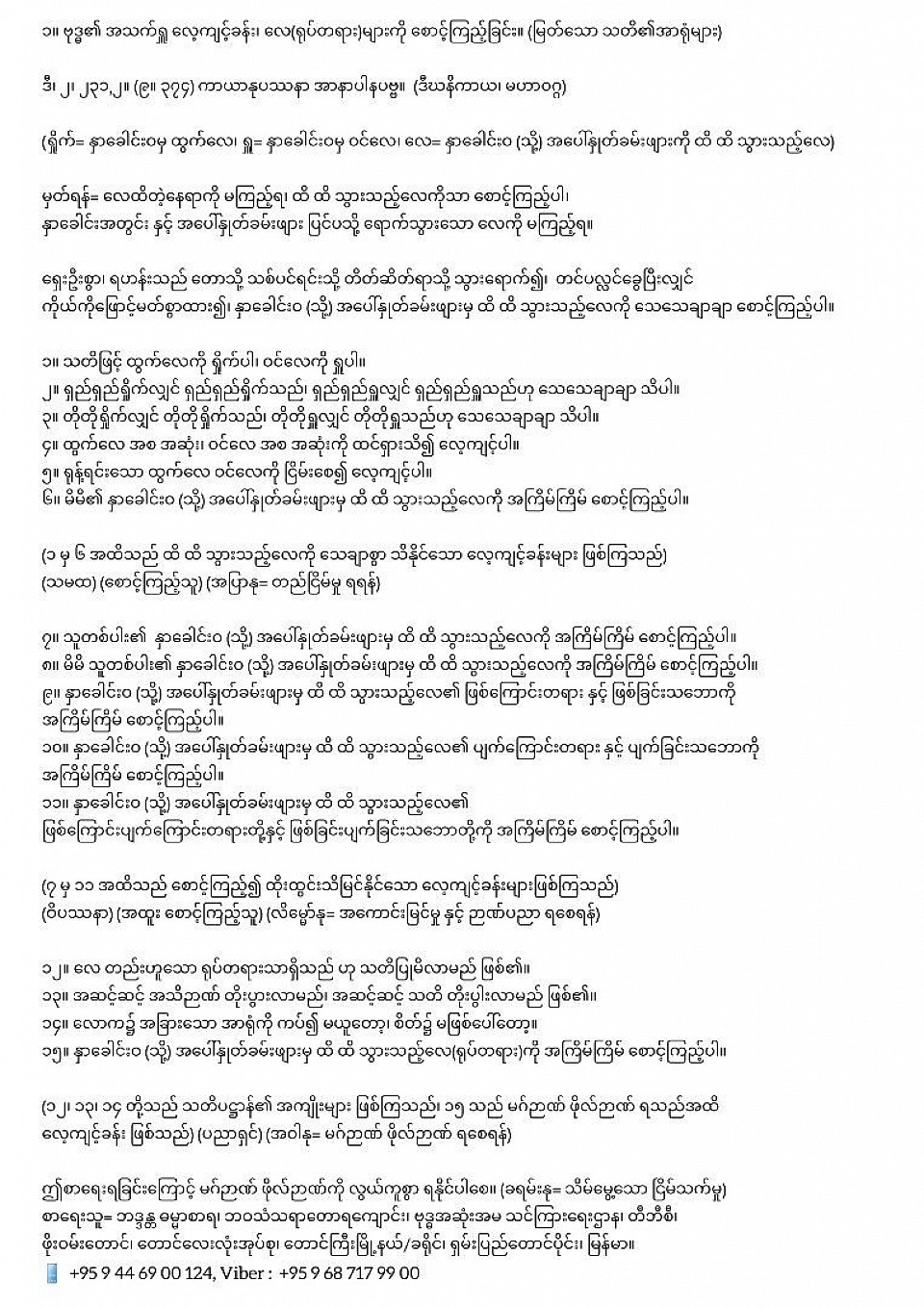
A4 paper size. ၁။ ဗုဒ္ဓ၏ အသက်ရှူ လေ့ကျင့်ခန်း၊ လေ(ရုပ်တရား)များကို စောင့်ကြည့်ခြင်း။ A4 Paper Size.
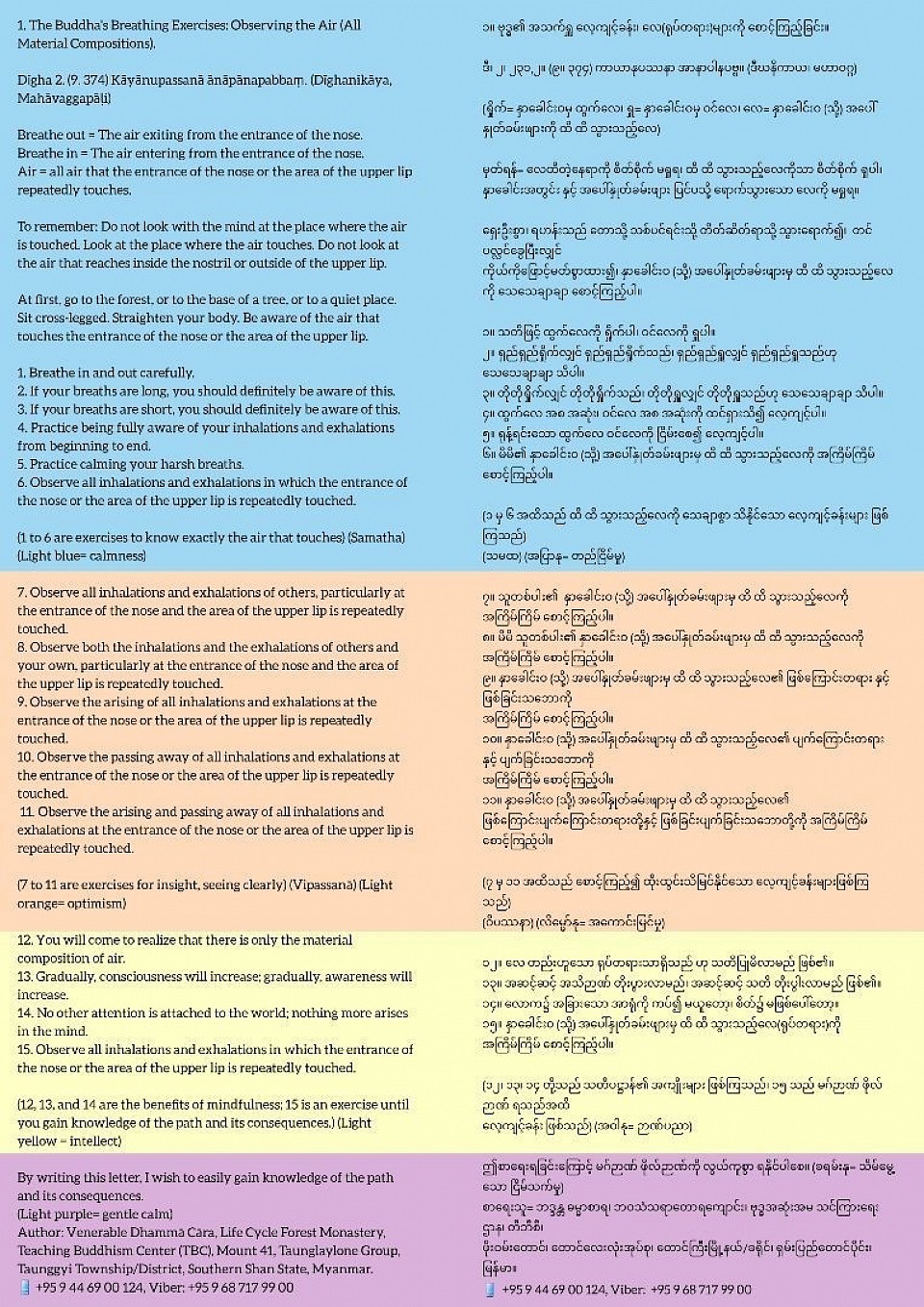
Buddha's Breathing Exercises.
1. The Buddha's Breathing Exercises: Observing the Air (All Material Compositions).
Dīgha 2. (9. 374) Kāyānupassanā ānāpānapabbaṃ. (Dīghanikāya, Mahāvaggapāḷi)
Breathe out = The air exiting from the entrance of the nose.
Breathe in = The air entering from the entrance of the nose.
Air = all air that the entrance of the nose or the area of the upper lip repeatedly touches.
To remember: Do not look with the mind at the place where the air is touched. Look at the place where the air touches. Do not look at the air that reaches inside the nostril or outside of the upper lip.
At first, go to the forest, or to the base of a tree, or to a quiet place. Sit cross-legged. Straighten your body. Be aware of the air that touches the entrance of the nose or the area of the upper lip.
1. Breathe in and out carefully.
2. If your breaths are long, you should definitely be aware of this.
3. If your breaths are short, you should definitely be aware of this.
4. Practice being fully aware of your inhalations and exhalations from beginning to end.
5. Practice calming your harsh breaths.
6. Observe all inhalations and exhalations in which the entrance of the nose or the area of the upper lip is repeatedly touched.
(1 to 6 are exercises to know exactly the air that touches) (Samatha) (Light blue= calmness)
7. Observe all inhalations and exhalations of others, particularly at the entrance of the nose and the area of the upper lip is repeatedly touched.
8. Observe both the inhalations and the exhalations of others and your own, particularly at the entrance of the nose and the area of the upper lip is repeatedly touched.
9. Observe the arising of all inhalations and exhalations at the entrance of the nose or the area of the upper lip is repeatedly touched.
10. Observe the passing away of all inhalations and exhalations at the entrance of the nose or the area of the upper lip is repeatedly touched.
11. Observe the arising and passing away of all inhalations and exhalations at the entrance of the nose or the area of the upper lip is repeatedly touched.
(7 to 11 are exercises for insight, seeing clearly) (Vipassanā) (Light orange= optimism)
12. You will come to realize that there is only the material composition of air.
13. Gradually, consciousness will increase; gradually, awareness will increase.
14. No other attention is attached to the world; nothing more arises in the mind.
15. Observe all inhalations and exhalations in which the entrance of the nose or the area of the upper lip is repeatedly touched.
(12, 13, and 14 are the benefits of mindfulness; 15 is an exercise until you gain knowledge of the path and its consequences.) (Light yellow = intellect)
By writing this letter, I wish to easily gain knowledge of the path and its consequences.
(Light purple= gentle calm)
Author: Venerable Dhammā Cāra, Life Cycle Forest Monastery, Teaching Buddhism Center (TBC), Mount 41, Taunglaylone Group, Taunggyi Township/District, Southern Shan State, Myanmar.
📱 +95 9 44 69 00 124, Viber: +95 9 68 717 99 00
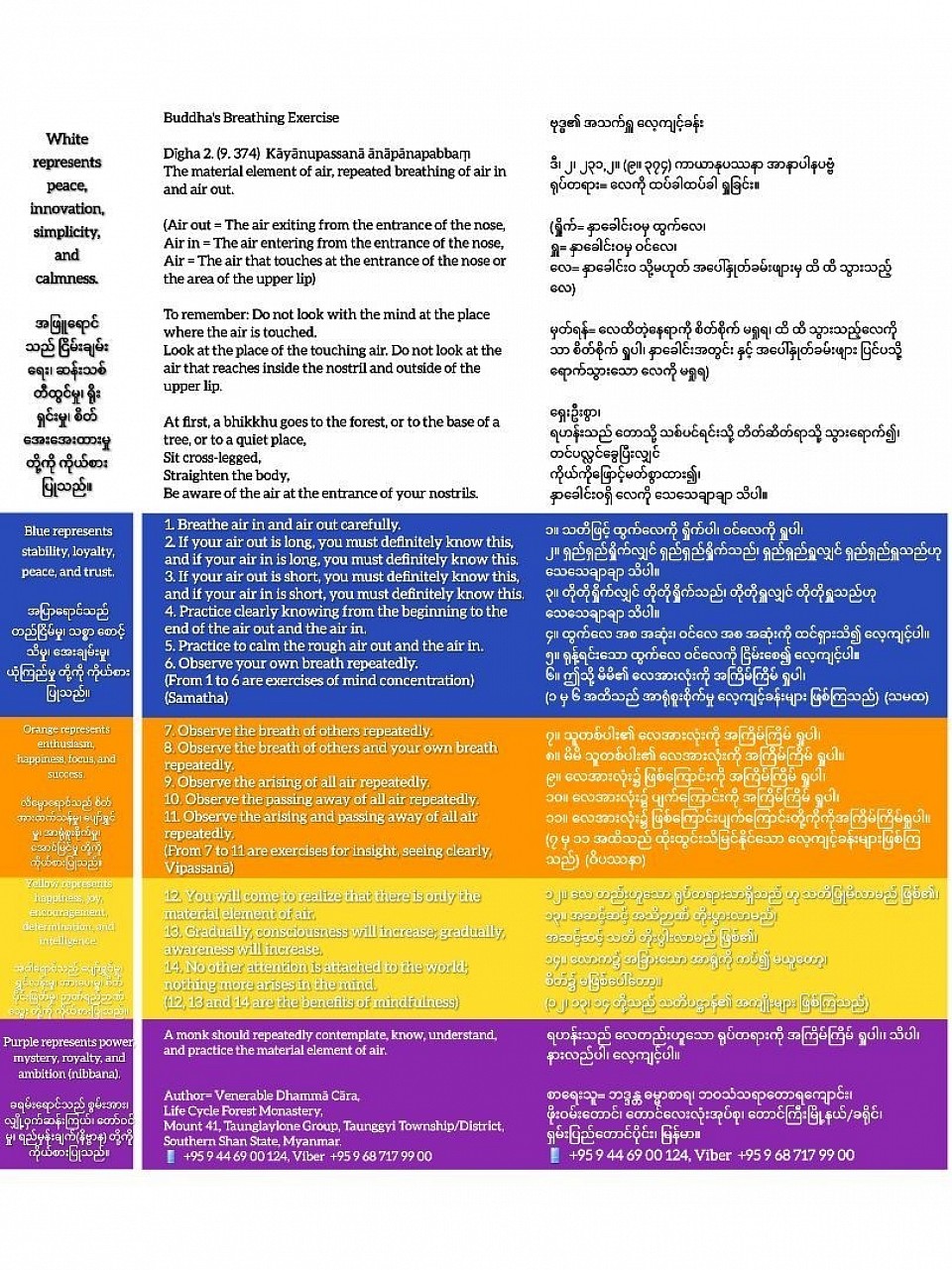
Words and 5 colors.
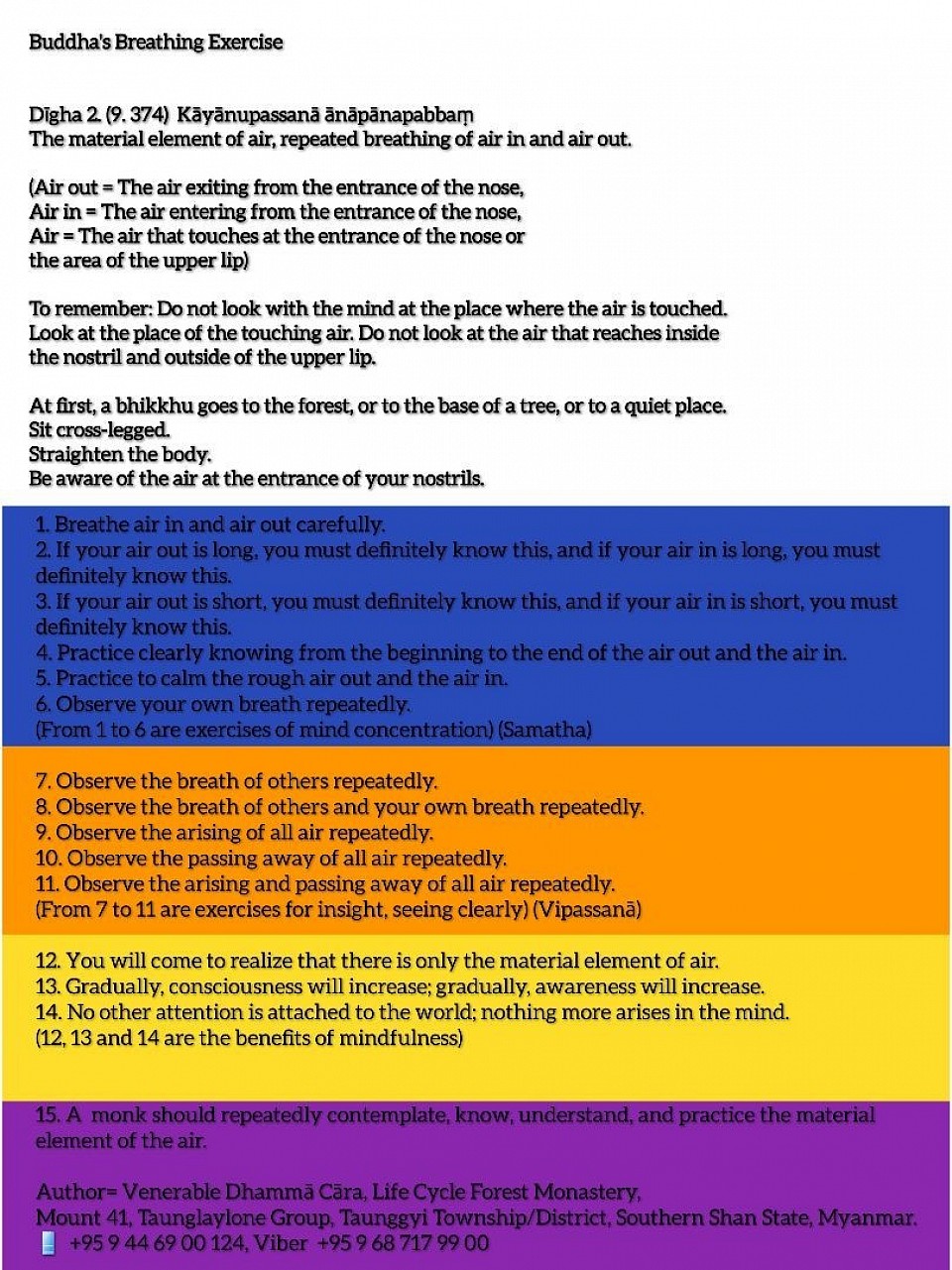
Buddha's Breathing Exercises in English Language.
အမူအကျင့်များကို ဆင်ခြင်သုံးသပ်လေ့ကျင့်ခန်းများ
ဒီဃ၊ ၂။ ၂၃၂,၃။ (၉။ ၃၇၅)
ကာယာနုပဿနာ ဣရိယာပထပဗ္ဗံ
၃၇၅။ ‘‘ပုန စပရံ, ဘိက္ခဝေ,
၁။ ဘိက္ခု ဂစ္ဆန္တော ဝါ ‘ဂစ္ဆာမီ’တိ ပဇာနာတိ,
၂။ ဌိတော ဝါ ‘ဌိတောမှီ’တိ ပဇာနာတိ,
၃။ နိသိန္နော ဝါ ‘နိသိန္နောမှီ’တိ ပဇာနာတိ,
၄။ သယာနော ဝါ ‘သယာနောမှီ’တိ ပဇာနာတိ,
၅။ ယထာ ယထာ ဝါ ပနဿ ကာယော ပဏိဟိတော ဟောတိ, တထာ တထာ နံ ပဇာနာတိ။
၆။ ဣတိ အဇ္ဈတ္တံ ဝါ ကာယေ ကာယာနုပ
၇။ ဗဟိဒ္ဓါ ဝါ ကာယေ ကာယာနုပဿီ ဝိဟရတိ,
၈။ အဇ္ဈတ္တဗဟိဒ္ဓါ ဝါ ကာယေ ကာယာနုပဿီ ဝိဟရတိ။
၉။ သမုဒယဓမ္မာနုပဿီ ဝါ ကာယသ္မိံ ဝိဟရတိ,
၁၀။ ဝယဓမ္မာနုပဿီ ဝါ ကာယသ္မိံ ဝိဟရတိ,
၁၁။ သမုဒယဝယဓမ္မာနုပဿီ ဝါ ကာယသ္မိံ ဝိဟရတိ။
၁၂။ ‘အတ္ထိ ကာယော’တိ ဝါ ပနဿ သတိ ပစ္စုပဋ္ဌိတာ ဟောတိ
၁၃။ ယာဝဒေဝ ဉာဏမတ္တာယ ပဋိဿတိမတ္တာယ အနိဿိတော စ ဝိဟရတိ,
၁၄။ န စ ကိဉ္စိ လောကေ ဥပါဒိယတိ။ ဧဝမ္ပိ ခေါ, ဘိက္ခဝေ,
၁၅။ ဘိက္ခု ကာယေ ကာယာနုပဿီ ဝိဟရတိ။
စာရေးသူ= ဘဒ္ဒန္တ ဓမ္မာစာရ၊ ဘဝသံသရာတောရကျောင်း၊
ဖိုးဝမ်းတောင်၊ တောင်လေးလုံးအုပ်စု၊ တောင်ကြီးမြို့နယ်/ခရိုင်၊
ရှမ်းပြည်တောင်ပိုင်း၊ မြန်မာ။
📱 +95 9 44 69 00 124, Viber +95 9 68 717 99 00
Exercises in contemplating the manners.
Dīgha 2. (9. 375)
Kāyānupassanā iriyāpathapabbaṃ
375.“Puna caparaṃ, bhikkhave,
1. bhikkhu gacchanto vā ‘Gacchāmī’ti pajānāti,
2. ṭhito vā ‘Ṭhitomhī’ti pajānāti,
3. nisinno vā ‘Nisinnomhī’ti pajānāti,
4. sayāno vā ‘Sayānomhī’ti pajānāti, yathā yathā vā panassa kāyo paṇihito hoti,
5. tathā tathā naṃ pajānāti.
6. Iti ajjhattaṃ vā kāye kāyānupassī viharati,
7. bahiddhā vā kāye kāyānupassī viharati,
8. ajjhattabahiddhā vā kāye kāyānupassī viharati.
9. Samudayadhammānupassī vā kāyasmiṃ viharati,
10. vayadhammānupassī vā kāyasmiṃ viharati,
11. samudayavayadhammānupassī vā kāyasmiṃ viharati.
12. ‘Atthi kāyo’ti vā panassa sati paccupaṭṭhitā hoti
13. yāvadeva ñāṇamattāya paṭissatimattāya anissito ca viharati,
14. na ca kiñci loke upādiyati. Evampi kho, bhikkhave,
15. bhikkhu kāye kāyānupassī viharati.
Author= Venerable Dhammā Cāra, Life Cycle ForestMonastery,
Mount 41, Taunglaylone Group, Taunggyi Township/District, Southern Shan State, Myanmar.
📱 +95 9 44 69 00 124, Viber +95 9 68 717 99 00
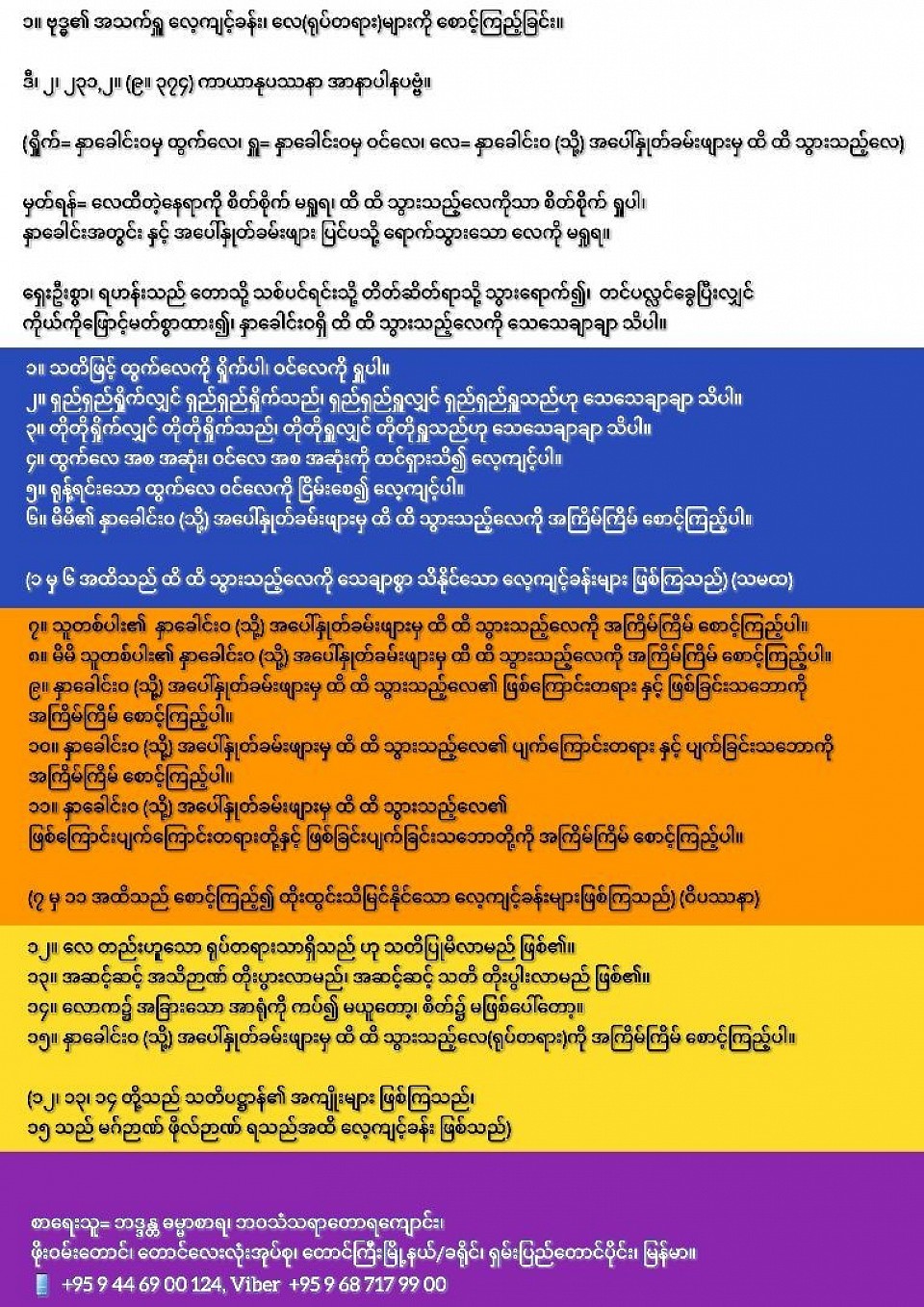
၁။ ဗုဒ္ဓ၏ အသက်ရှူ လေ့ကျင့်ခန်း၊ လေ(ရုပ်တရား)များကို စောင့်ကြည့်ခြင်း။
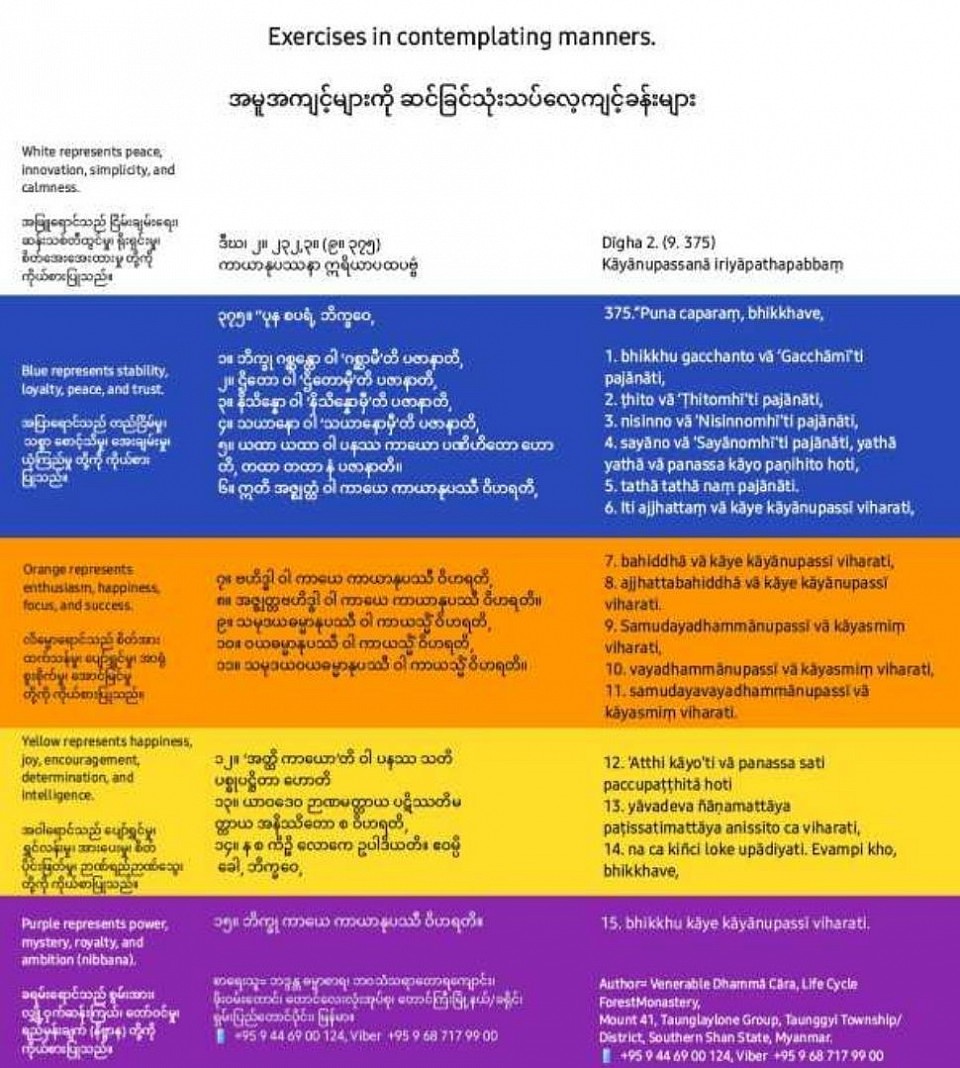
Exercises in contemplating manners. အမူအကျင့်များကို ဆင်ခြင်သုံးသပ်လေ့ကျင့်ခန်းများ။
၂။ ကိုယ်အမူအရာများ၌ ကိုယ်အတွင်း လေ၏ တောင့်တင်း လှုပ်ရှားမှုများကို ရှုမှတ်ရန် လေ့ကျင့်ခန်းများ။
ဒီဃ၊ ၂။ ၂၃၂,၃။ (၉။ ၃၇၅)၊ ကာယာနုပဿနာ ဣရိယာပထပဗ္ဗ။
၁။ သွားလျှင် ''သွားသည်''ဟု အတိအကျ သိပါ၊
၂။ ရပ်လျှင် ''ရပ်သည်''ဟု အတိအကျ သိပါ၊
၃။ ထိုင်လျှင် ''ထိုင်သည်''ဟု အတိအကျ သိပါ၊
၄။ လျောင်းလျှင် ''လျောင်းသည်''ဟု အတိအကျ သိပါ၊
၅။ ကိုယ်အတွင်းရှိ လေသည် ကိုယ်အမူအရာအားဖြင့် တည်နေ၏၊
ကိုယ်အမူအရာများ၌ ကိုယ်အတွင်း လေ၏ တောင့်တင်း လှုပ်ရှားမှုများကို အတိအကျ သိပါ။
၆။ မိမိ ကိုယ်အမူအရာများ၌ ကိုယ်အတွင်း လေ၏ တောင့်တင်း လှုပ်ရှားမှုများကို အကြိမ်ကြိမ် ရှုမှတ်ပါ။
(၁ မှ ၆ အထိသည် ကိုယ်အမူအရာများ၌ ကိုယ်အတွင်း လေ၏ တောင့်တင်း လှုပ်ရှားမှုများကို
အတိအကျ သိရန် နှင့် ရှုမှတ်ရန် လေ့ကျင့်ခန်းများဖြစ်ကြသည်)
၇။ သူတစ်ပါး၏ ကိုယ်အမူအရာများ၌ ကိုယ်အတွင်း လေ၏ တောင့်တင်း လှုပ်ရှားမှုများကို
အကြိမ်ကြိမ် ရှုမှတ်ပါ။
၈။ မိမိ နဲ့ သူတစ်ပါး၏ ကိုယ်အမူအရာများ၌ ကိုယ်အတွင်း လေ၏ တောင့်တင်း လှုပ်ရှားမှုများကို
အကြိမ်ကြိမ် ရှုမှတ်ပါ။
၉။ ကိုယ်အမူအရာများ၌ ကိုယ်အတွင်း လေ၏ တောင့်တင်း လှုပ်ရှားမှုများတွင်
ဖြစ်ကြောင်းတရားနှင့် ဖြစ်ခြင်းသဘောကို အကြိမ်ကြိမ် ရှုမှတ်ပါ။
၁၀။ ကိုယ်အမူအရာများ၌ ကိုယ်အတွင်း လေ၏ တောင့်တင်း လှုပ်ရှားမှုများတွင်
ပျက်ကြောင်းတရားနှင့် ပျက်ခြင်းသဘောကို အကြိမ်ကြိမ် ရှုမှတ်ပါ။
၁၁။ ကိုယ်အမူအရာများ၌ ကိုယ်အတွင်း လေ၏ တောင့်တင်း လှုပ်ရှားမှုများတွင်
ဖြစ်ကြောင်း ပျက်ကြောင်းတရား နှင့် ဖြစ်ခြင်းပျက်ခြင်းသဘောကို အကြိမ်ကြိမ် ရှုမှတ်ပါ။
(၇ မှ ၁၁ အထိသည် ရှုမှတ်၍ ထိုးထွင်းသိမြင်နိုင်သော လေ့ကျင့်ခန်းများဖြစ်ကြသည်) (ဝိပဿနာ)
၁၂။ ကိုယ်အတွင်း လေ၏ တောင့်တင်း လှုပ်ရှားမှု ရုပ်တရားသာရှိသည် ဟု သတိပြုမိလာမည်။
၁၃။ အဆင့်ဆင့် အသိဉာဏ် တိုးပွားလာမည်၊ အဆင့်ဆင့် သတိ တိုးပွားလာမည်။
၁၄။ လောက၌ အခြားသော အာရုံကို ကပ်၍ မယူတော့၊ စိတ်၌ မဖြစ်ပေါ်တော့။
၁၅။ ကိုယ်အမူအရာများ၌ ကိုယ်အတွင်း လေ၏ တောင့်တင်း လှုပ်ရှားမှုများကို အကြိမ်ကြိမ် ရှုမှတ်ပါ။
(၁၂၊ ၁၃၊ ၁၄ တို့သည် သတိပဋ္ဌာန်၏ အကျိုးများ ဖြစ်ကြသည်၊
၁၅ သည် မဂ်ဉာဏ် ဖိုလ်ဉာဏ် ရသည်အထိ လေ့ကျင့်ခန်း ဖြစ်သည်)
စာရေးသူ= ဘဒ္ဒန္တ ဓမ္မာစာရ၊ ဘဝသံသရာတောရကျောင်း၊ ဖိုးဝမ်းတောင်၊
တောင်လေးလုံးအုပ်စု၊ တောင်ကြီးမြို့နယ်/ခရိုင်၊ ရှမ်းပြည်တောင်ပိုင်း၊ မြန်မာ။
📱 +95 9 44 69 00 124, Viber +95 9 68 717 9900
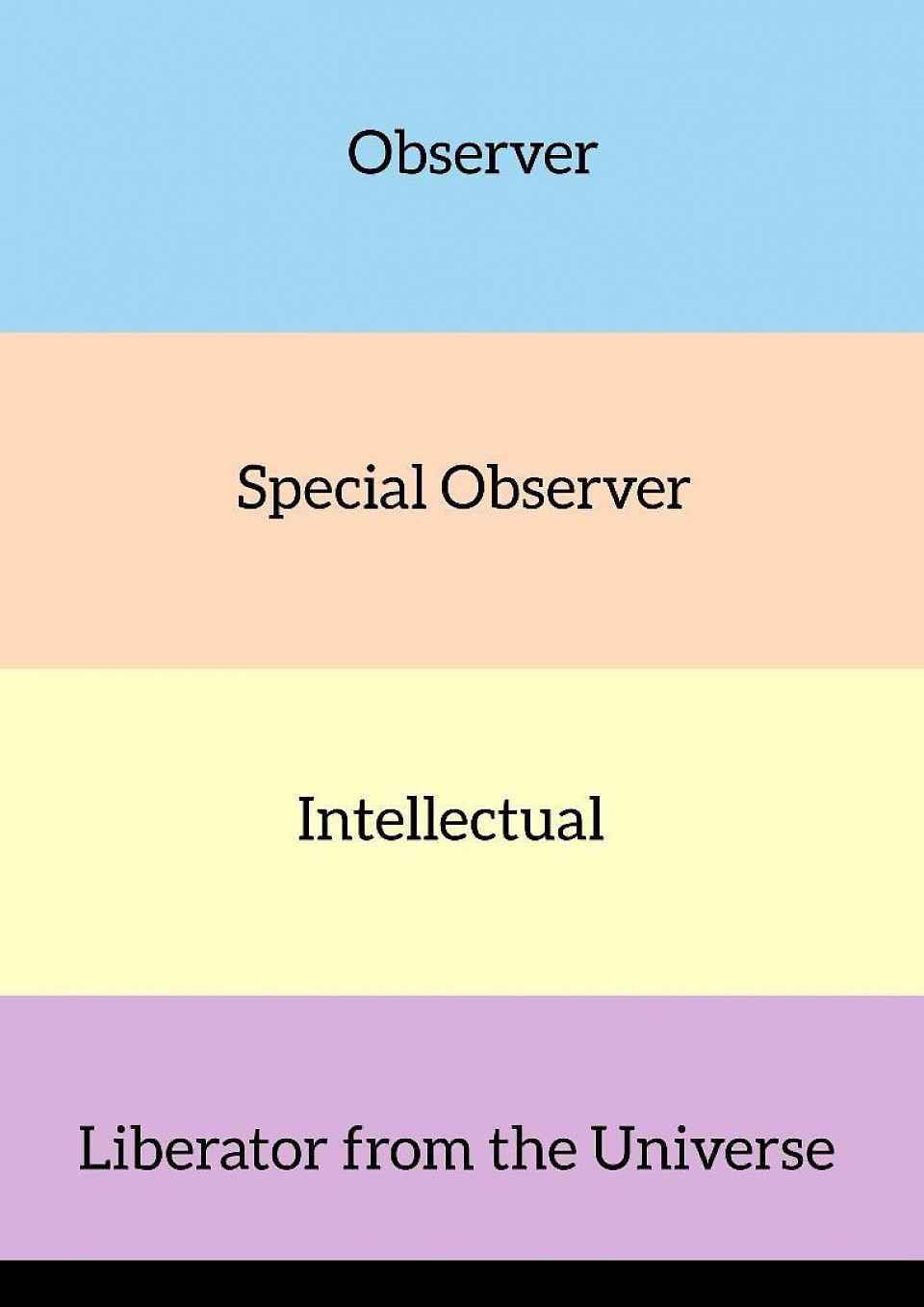
4 colors
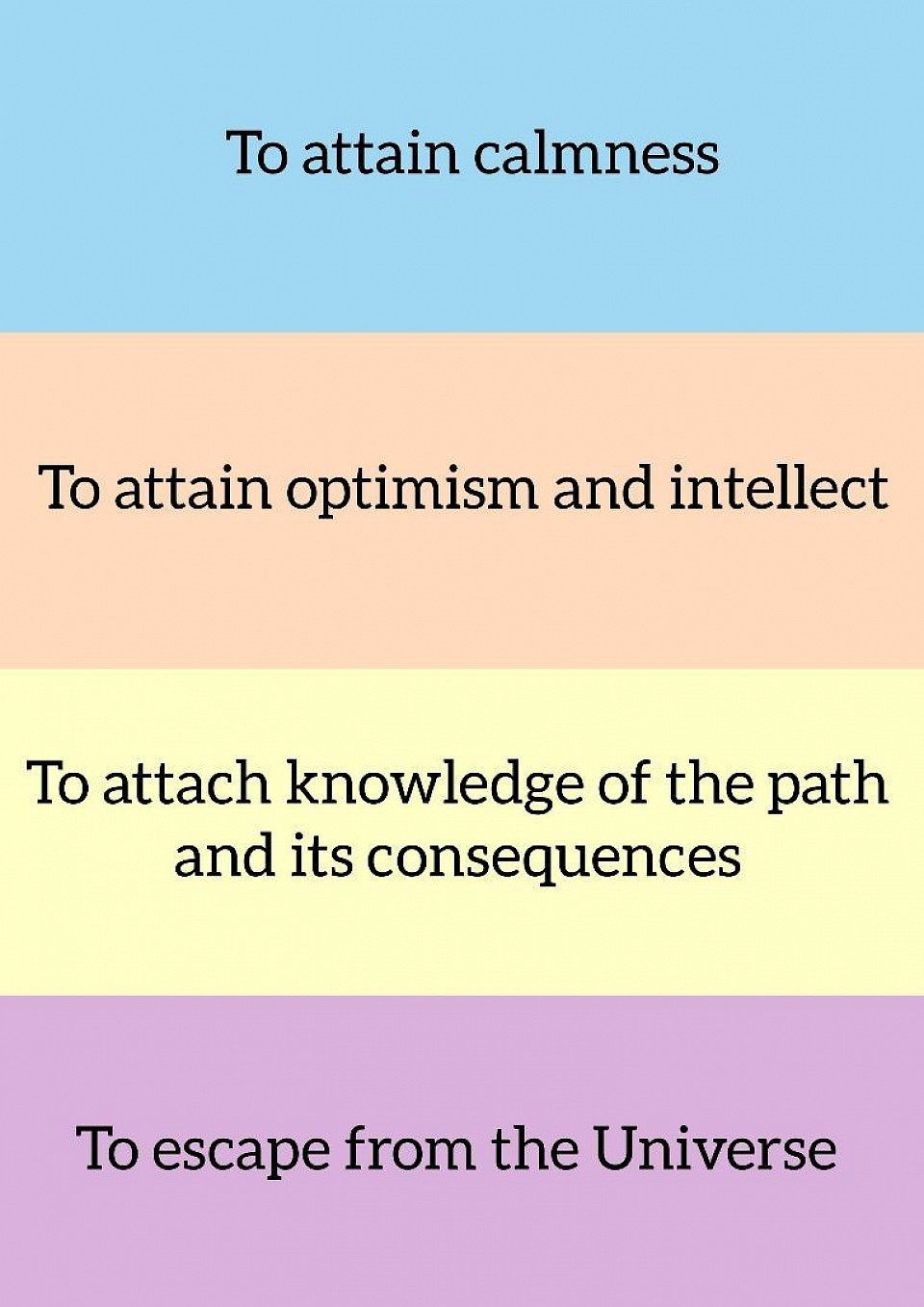
4 colors and words.
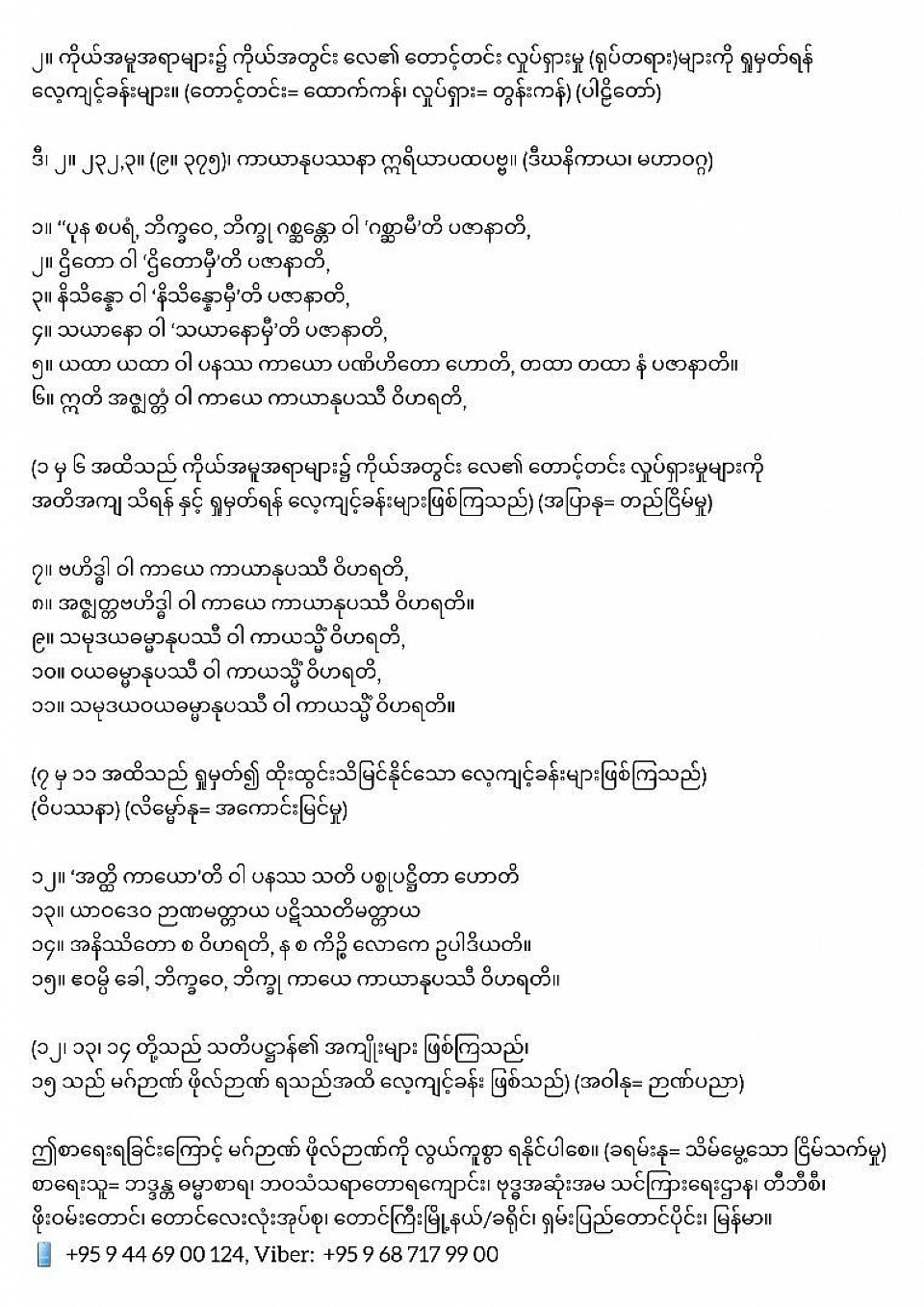
ဣရိယာပထ၊ ပါဠိ။
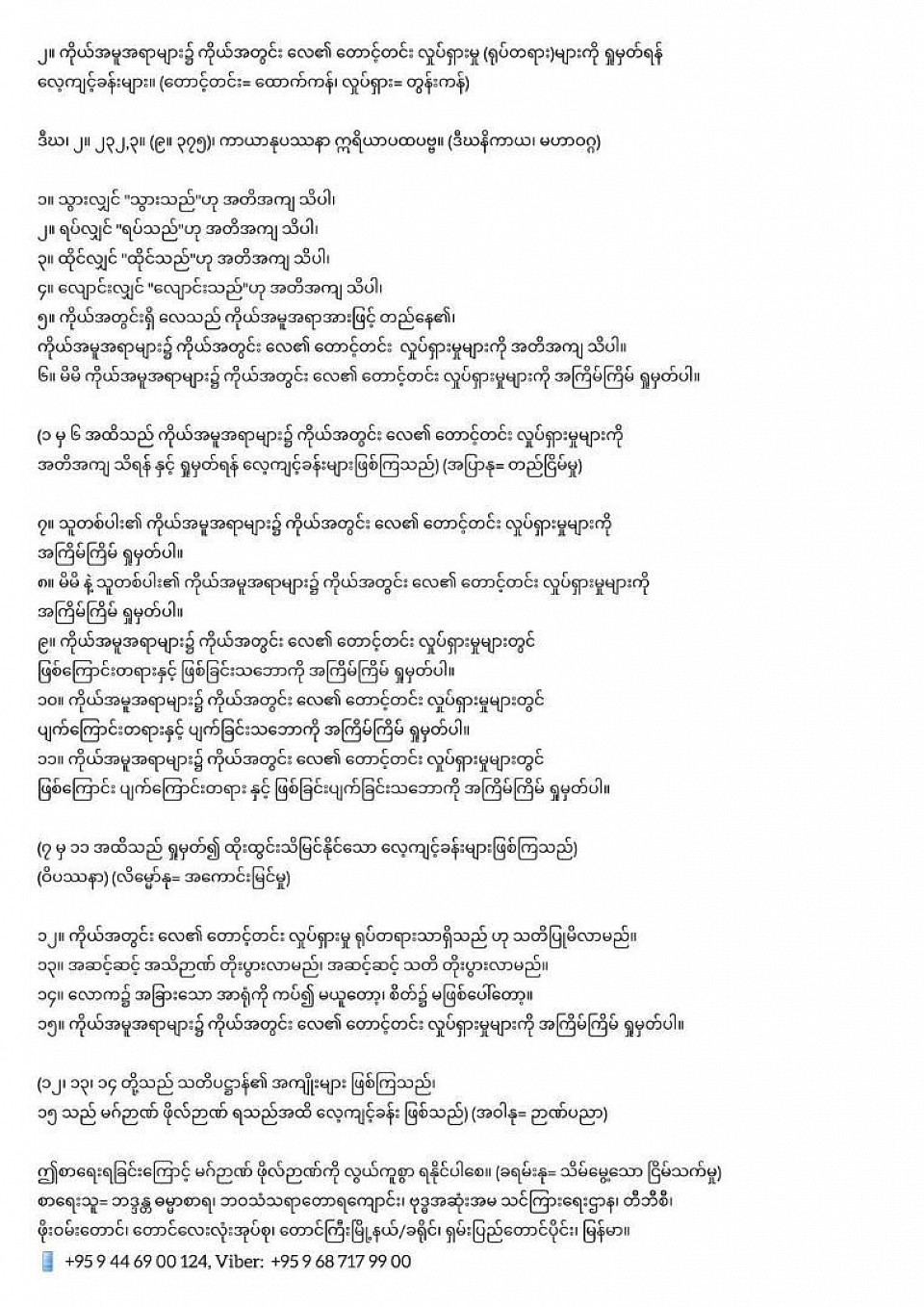
အဓိပ္ပါယ် ဣရိယာပထ။
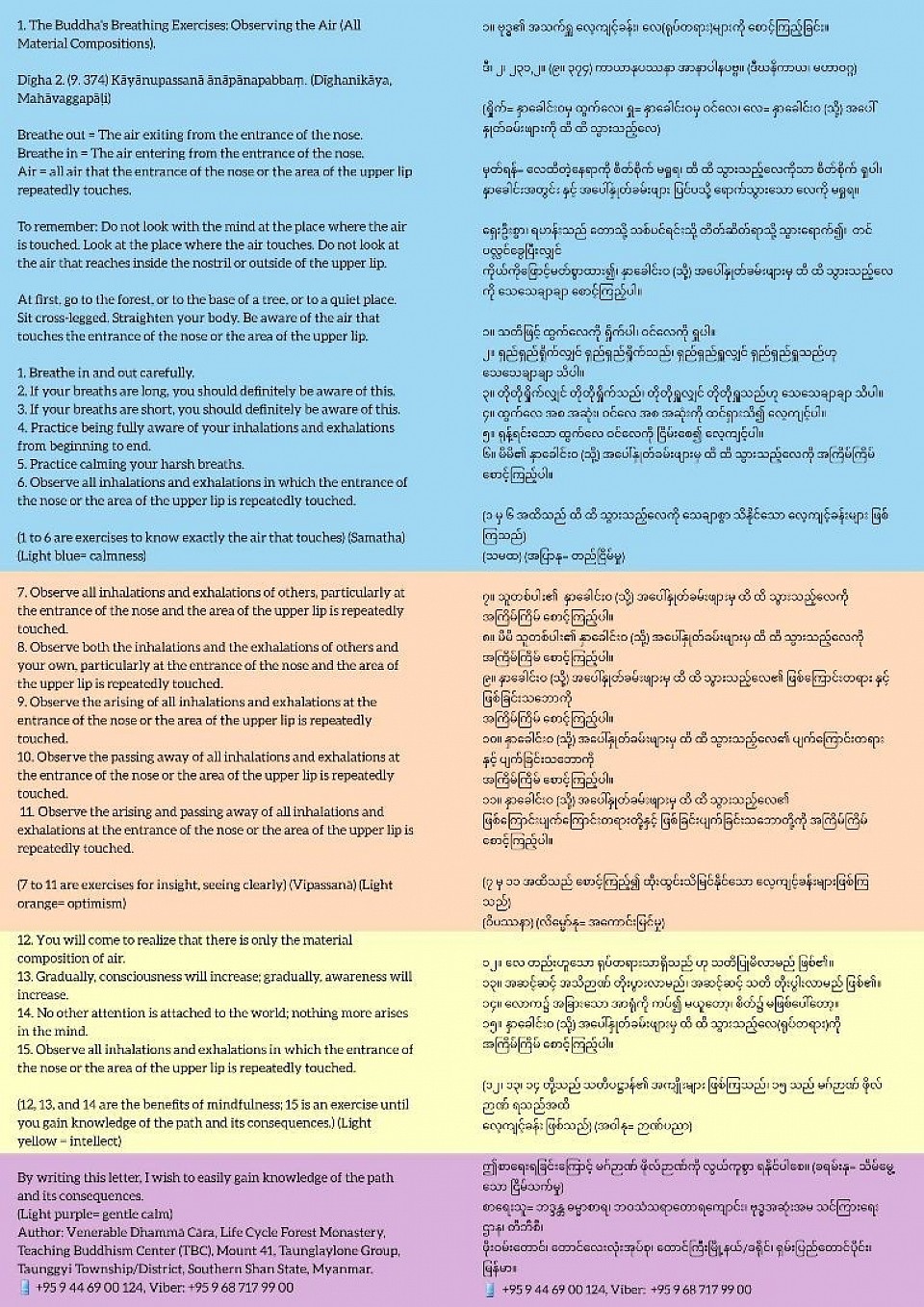
အာနာပါနအခန်း (English, Myanmar)